


An evaluation and retooling of the laboratory facilities at the SJPI was conducted to ensure it was equipped with the appropriate equipment to facilitate training and certification in the use and management of current and emerging refrigerants and RAC equipment. The laboratory was upgraded to include equipment such as:
| Electronic Refrigerant Scales | Refrigerant Identifiers |
| Manifolds | Multi-meters |
| Pressure Testing Kits | Refractometers |
| Vacuum Gauges | Recovery Cylinders |
| Vacuum Pumps | Leak Detectors |
| Recovery Units | Various handheld tools |
| Demonstration Equipment – Wall Split Indoor Units and Commercial Refrigeration Units | |
The upgrade also aided in the SJPI’s certification to offer the CVQ Level II in Air Conditioning and Refrigeration.
Click the thumbnails below to view more photos of the upgrade:

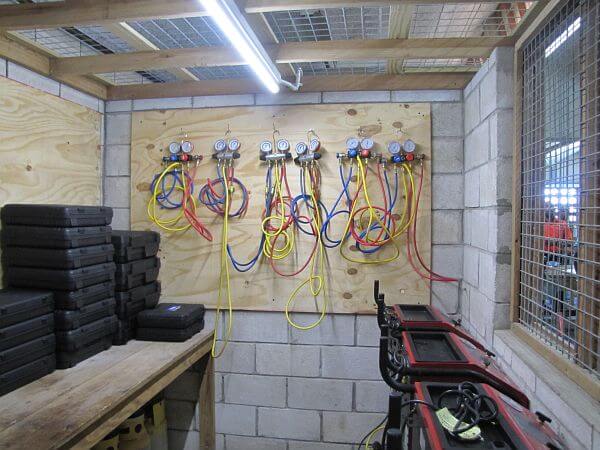

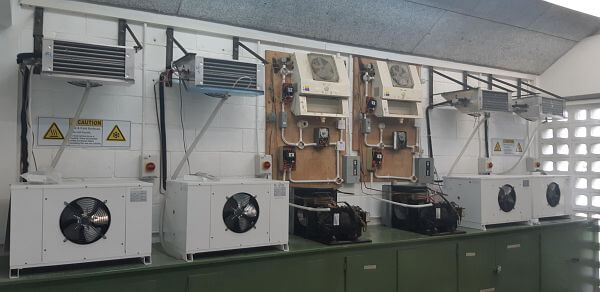


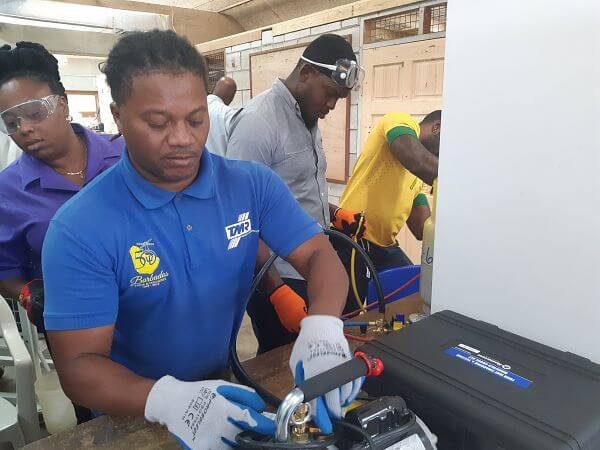 Recognising that as HCFCs are phased-out, new and alternative refrigeration technologies will begin to saturate the domestic market, the training of service technicians in the Refrigeration and Air Conditioning (RAC) sector in safe use and handling of alternative refrigerants to HCFCs was identified as a critical need.
The Ozone Programme designed and executed a training programme in “New and Alternative Refrigeration and Refrigerant Technologies”.
The training was intended to:
- Enhance skills in the recovery and reuse of HCFCs in an effort to reduce the consumption of virgin HCFCs on the market;
- Increase understanding of the need to reduce the incidence of venting and release of ODS into the atmosphere; and
- Provide some exposure to the new and alternative refrigeration and refrigerant technologies available in the global market.
Based on observed needs and trends, the training material was designed with a focus on:
- Introduction of the Montreal Protocol and Ozone Depletion
- Review of the Basic Principles of Refrigeration
- Alternative Refrigerants: HCFCs, HFCs and HCs
- Hydrocarbon Refrigerants Safe Handling and Performance
- Hydrocarbon Conversion
- Carbon Dioxide as a Refrigerant
- Ammonia-Water Absorption Refrigerant System
- Summary of Good Practices
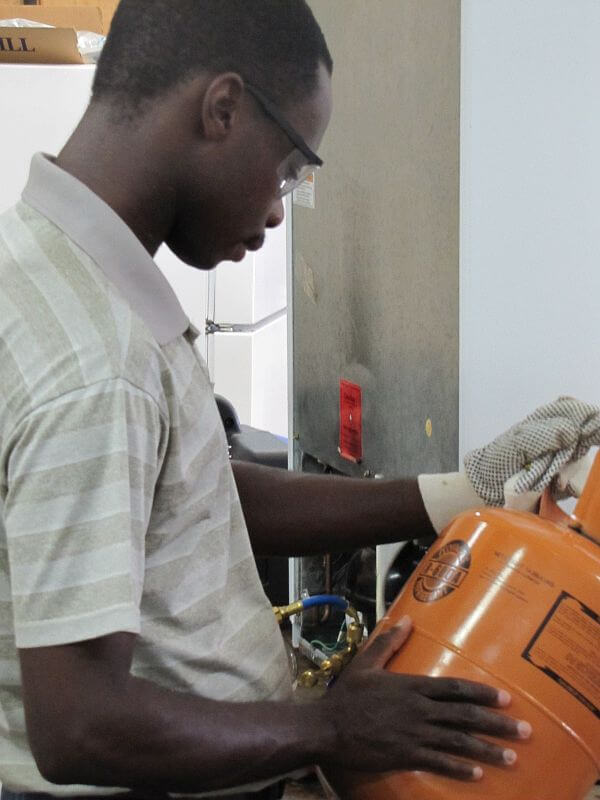
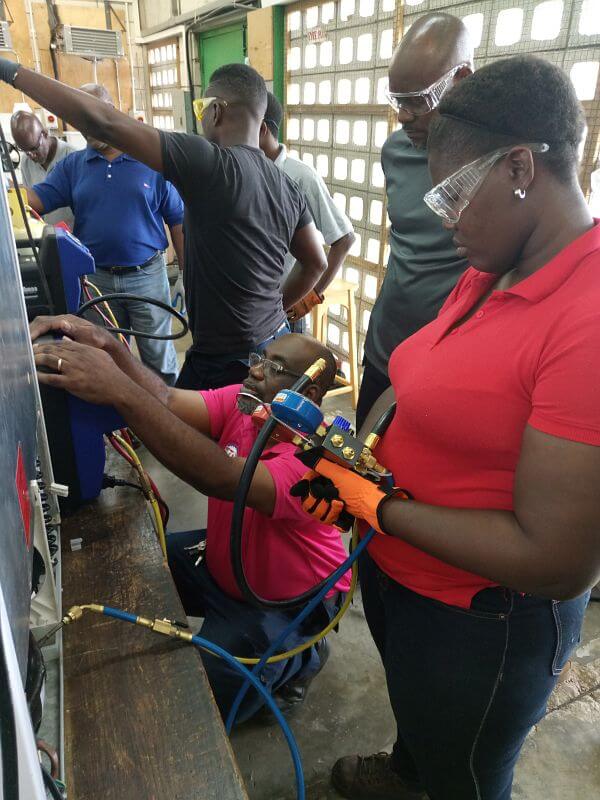
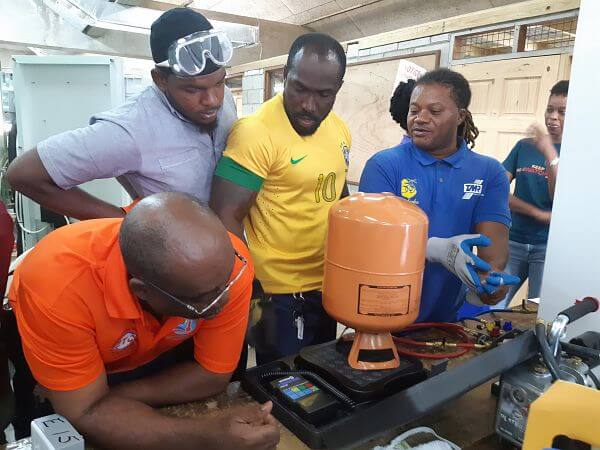
- Practical Session: Retrofit from HFC to HC refrigerant
A train-the-trainer workshop was conducted in August 2017 from which the Ozone Programme recruited a cohort of trainers to deliver other training sessions.
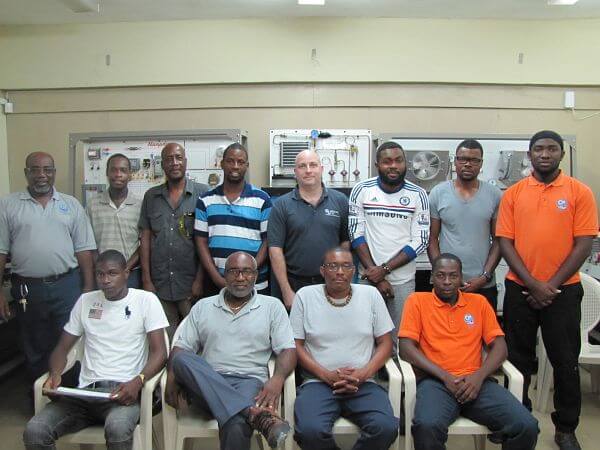
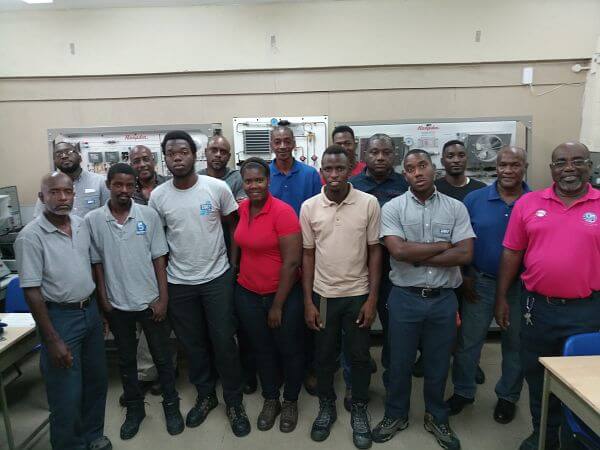
In total, one hundred and one (101) technicians (99 males and two females) took part in the training workshops between August 2017 and April 2019.
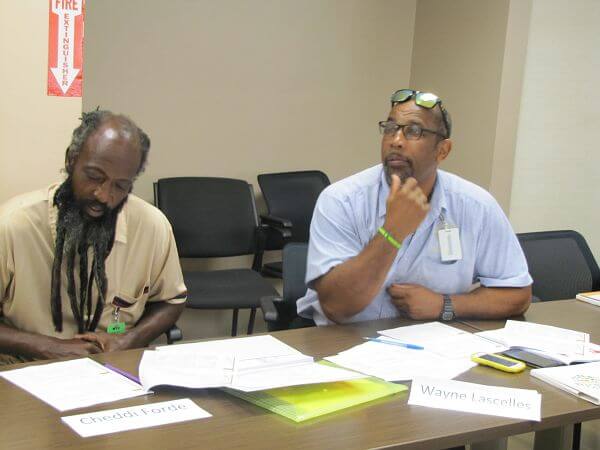
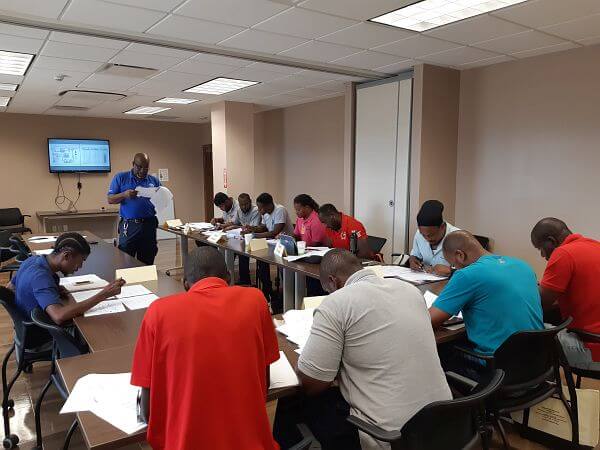
Click the thumbnails below to view more photos of the training:
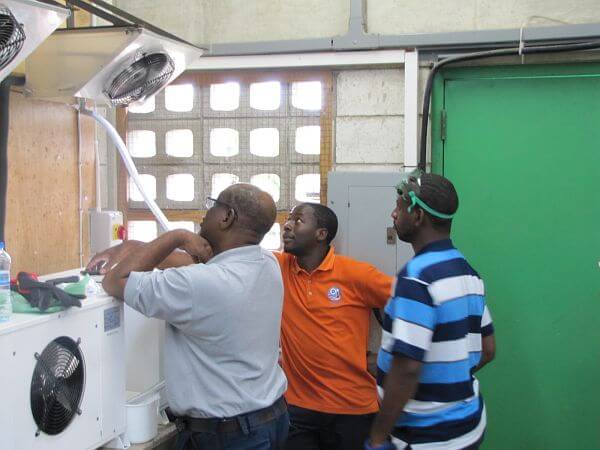
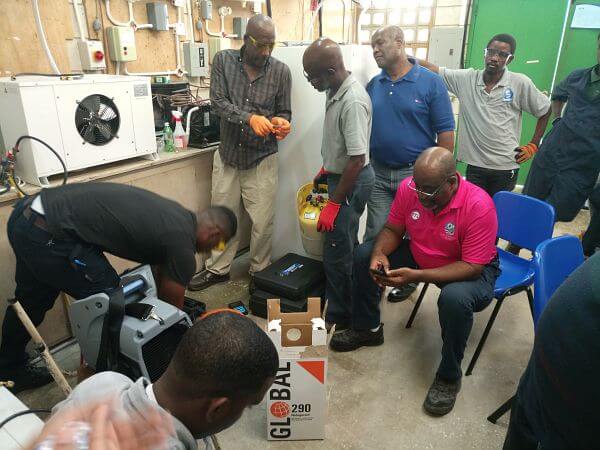
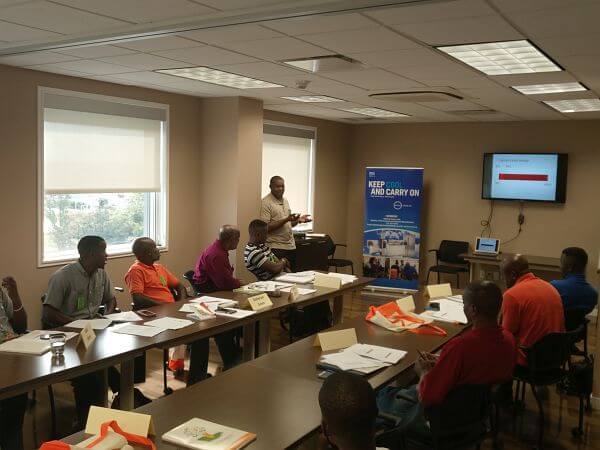
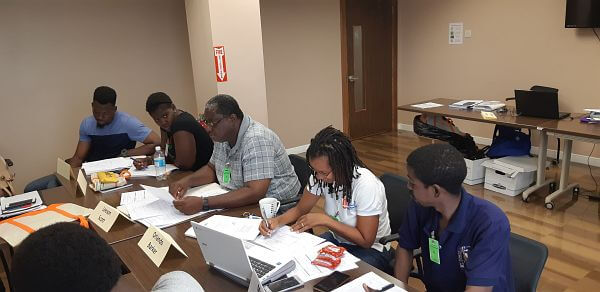
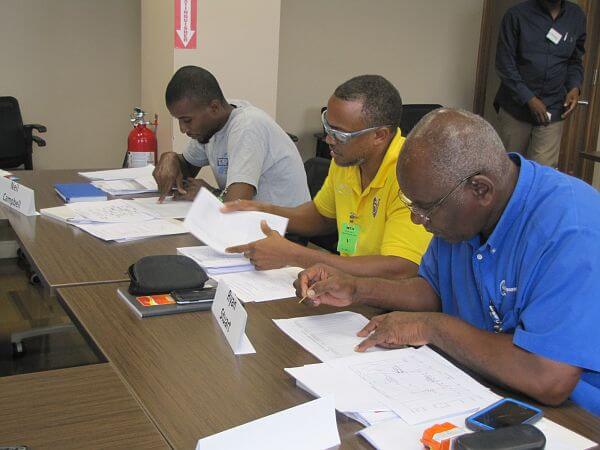
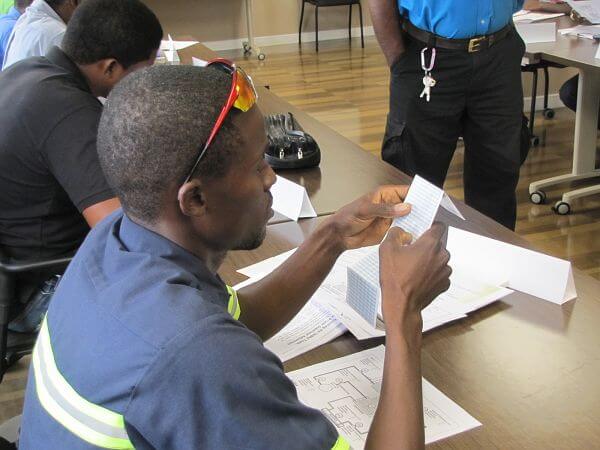
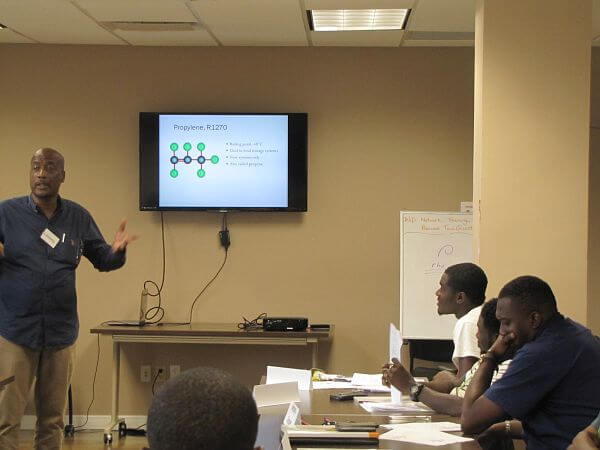
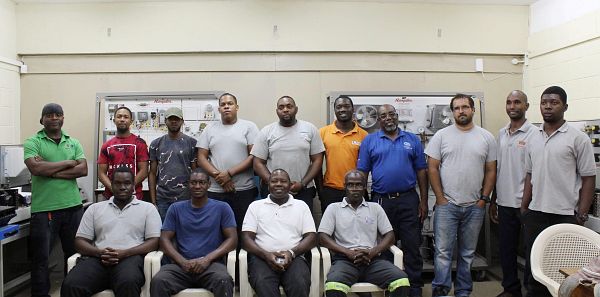
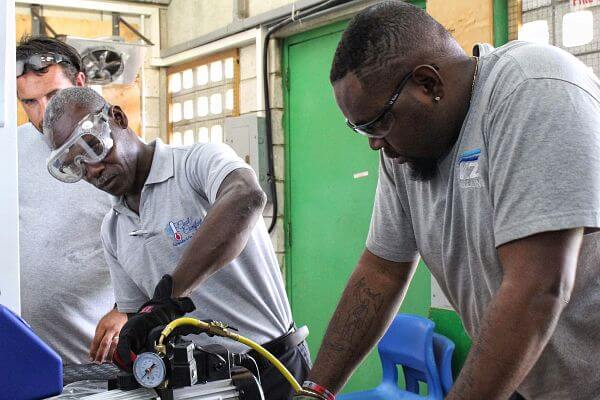
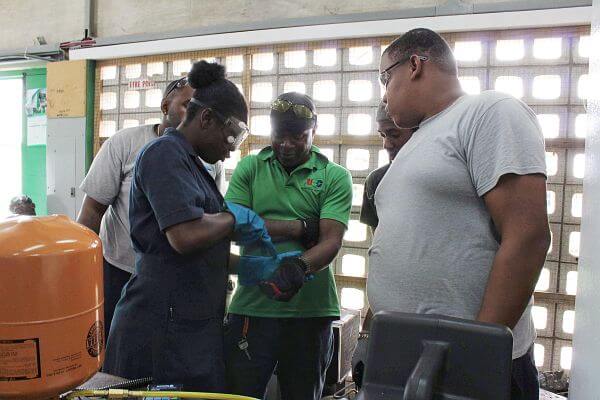
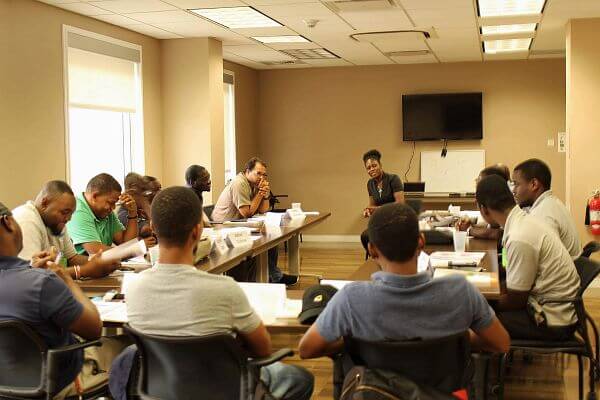
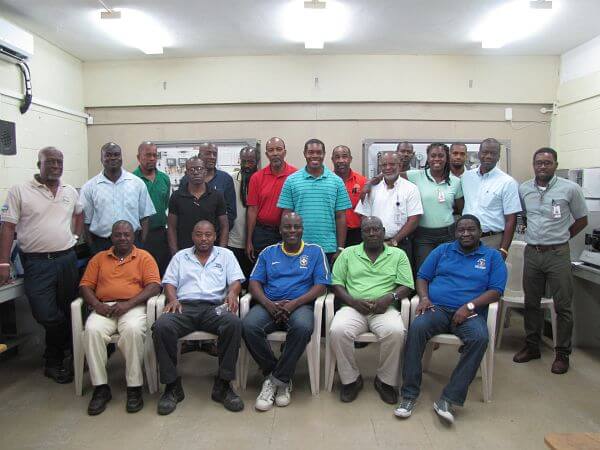
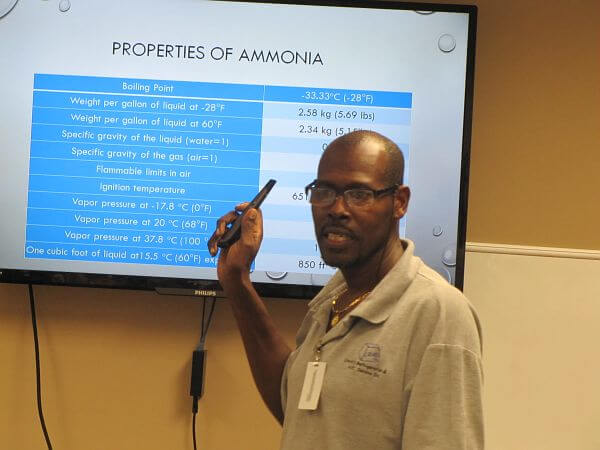
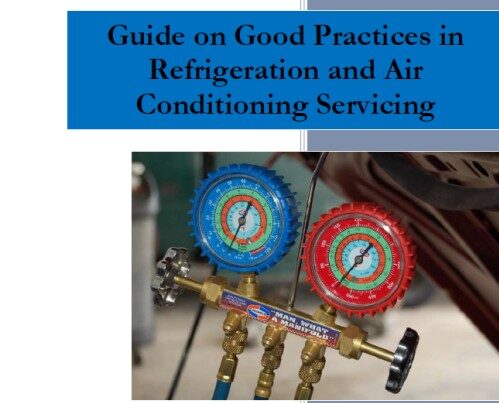 The Guide on Good Practices in Refrigeration and Air Conditioning Servicing was produced as part of the continuous effort to enhance the knowledge and capacity of local RAC technicians to respond and contribute to national compliance actions being undertaken as a Party to the Montreal Protocol. The Good Practice Guide was developed taking into consideration recent amendments to the Montreal Protocol.
The Good Practice Guide can be used as a reference for the reduction of HCFC and HFC emissions into the atmosphere. It applies to the Industrial, Commercial, Residential and Domestic Appliances, Mobile Refrigeration and Mobile Air-Conditioning trade sectors.
The GPG may be found here.

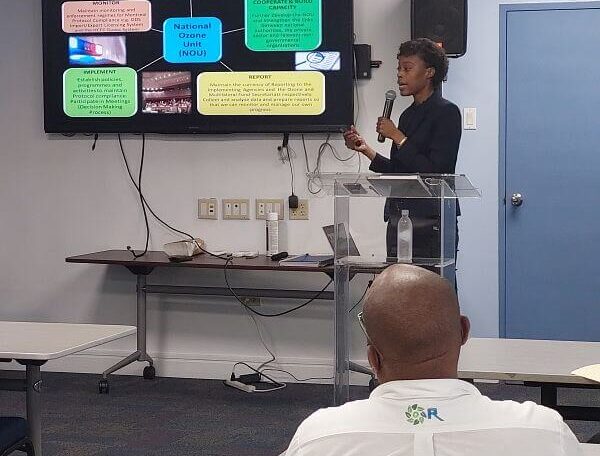 Barbados’ HPMP highlights the need for the delivery of training to RAC importers and retailers in the identification and handling of refrigerants to support a certification/licensing system for importers.
The identification of refrigerants is crucial to the reduction and phase out of HCFCs and to ensure that refrigerants that are imported adhere to all legal requirements. Training in the safe handling and storage of refrigerants is also necessary to prevent potential life-threatening accidents.
The training and sensitisation sessions were designed to inform importers and retailers of refrigerant gas about the new and alternative types of gases available on the local and international markets, the requirements for safe handling, storage and to highlight the benefits of using a refrigerant identifier.
The sessions also introduced participants to the Montreal Protocol on Substances that Deplete the Ozone layer and its relevance to protecting the ozone layer, reducing the impacts of climate change and promoting energy efficiency.
In total 26 person attended the sessions (24 males and 2 females), representing 18 importing companies.
Click the thumbnails below to view more photos of the importer training and sensitisation:
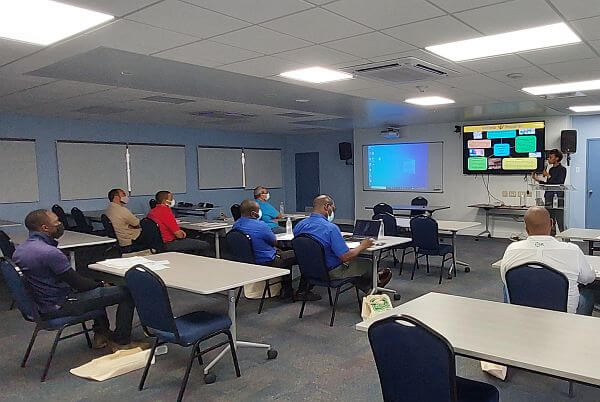
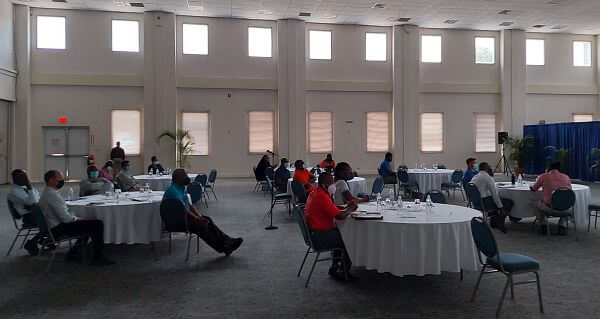
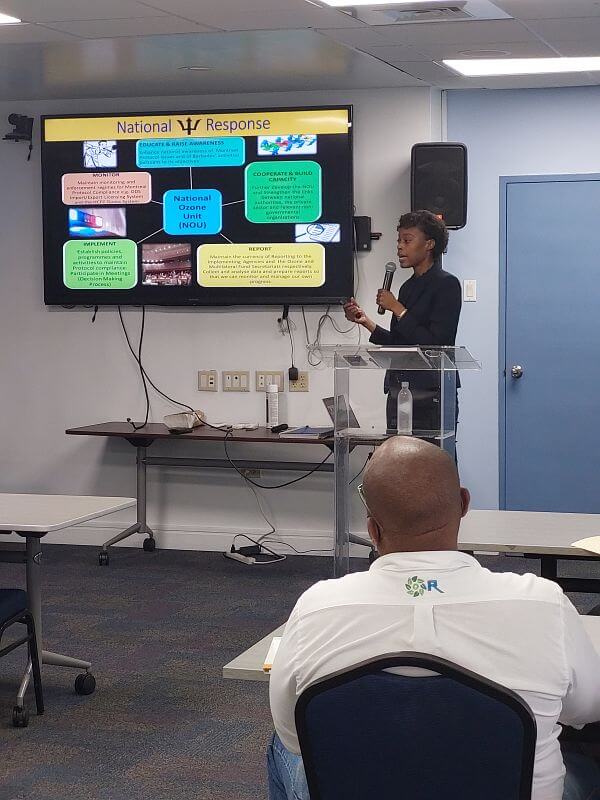
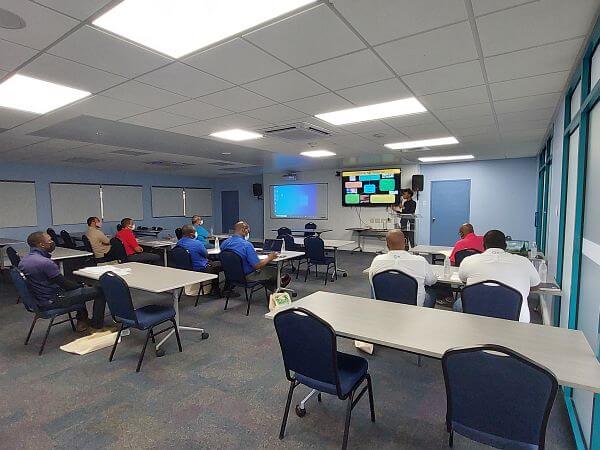
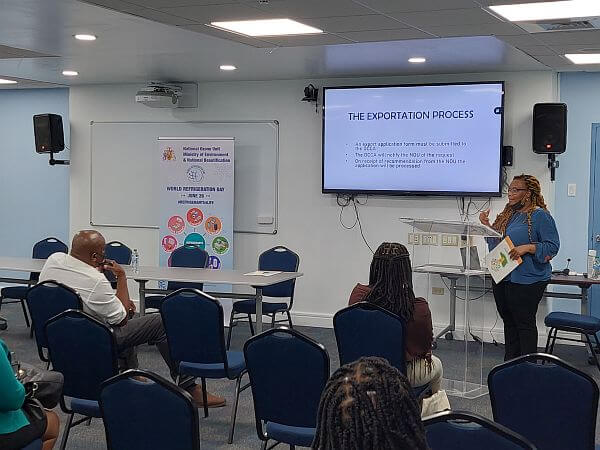
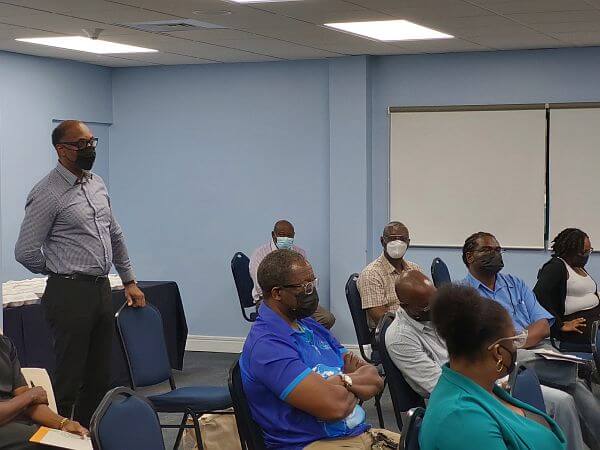
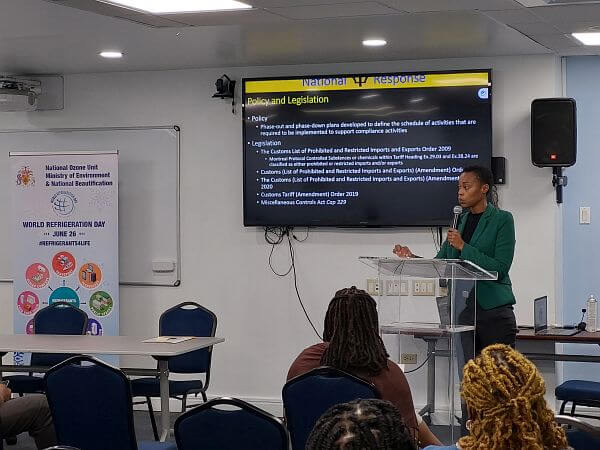
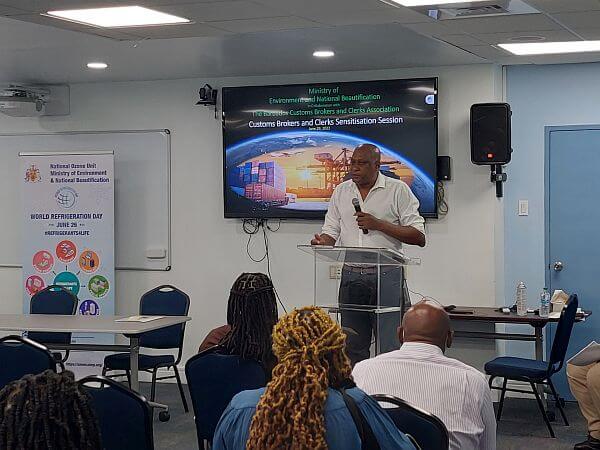 Customs Brokers and Clerks have been identified as a valuable stakeholder group in the monitoring of trade in refrigerant gases and other substances regulated under the Montreal Protocol on Substances that Deplete the Ozone Layer. They can potentially play a critical role in improving the accuracy of associated trade data and curbing illegal trade activities.
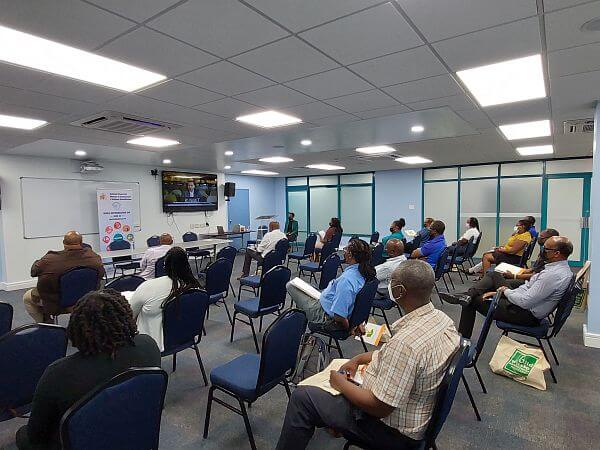
In June 2022, the National Ozone Programme collaborated with the Barbados Customs Brokers and Clerks Association (BCBCA), the Customs and Excise Department (CED) and the Department of Commerce and Consumer Affairs (DCCA) for a session to discuss policies and procedures related to the phase out of use of HCFCs globally, and the transition to use of alternative substances.
Click the thumbnails below to view more photos of customs brokers sensitisation:
- establish their comparability with international standards and programmes offered at equivalent international institutions; and
- identify gaps and remedies for upgrading to an Associate Degree level as well as for alignment with the accredited RAC programme of other institutions in Article 5 and or Non-Article 5 countries.
The ability to identify and appropriately document the import and export of Ozone Depleting Substance (ODS) is critical to the efforts to regulate their use in Barbados. Barbados’ HPMP highlights the need for the training or re-training of customs officers and other trade and enforcement officers in the identification and monitoring of trade ODS to ensure that imported refrigerants and other ODS-containing products adhere to the existing legal and regulatory requirements.
In June 2024, training sessions for Customs and Trade Enforcement Officers was conducted to inform of the current requirements and procedures for monitoring and controlling trade in chemicals regulated by the Montreal Protocol on Substances that Deplete the Ozone Layer.
Participants were made aware of:
- the Montreal Protocol, and its importance in protecting the ozone layer and reducing greenhouse gas (GHG) emissions.
- Barbados’ plan for the phase out of HCFC consumption by 2030.
- local and international requirements for monitoring and control of trade in ODS.
- standards for labelling of ODS-containing products and ways in which they can be identified.
Customs Officers, Customs Guards, Trade Officers and Trading Standard Inspectors participated in the training conducted by the National Ozone Programme in collaboration with the Customs and Excise Department (CED) and the Department of Commerce and Consumer Affairs (DCCA).
In January 2024, the National Ozone Programme facilitated a session to sensitise stakeholders in the Refrigeration and Air conditioning (RAC) sector on the availability of the Caribbean Vocational Qualification (CVQ) Level II in Air Conditioning and Refrigeration.
The Competency Standards for the CVQ Level II in Air Conditioning & Refrigeration (CCMEM20607) may be accessed here.
For more information on the administration of this CVQ, please contact the TVET Council at 434-3790/91 or office@tvetcouncil.com.bb or the SJPI N/CVQ Coordinator, Ms. Jenise Hurley at 535-2281 or jenise.hurley@sjpi.edu.bb.
